
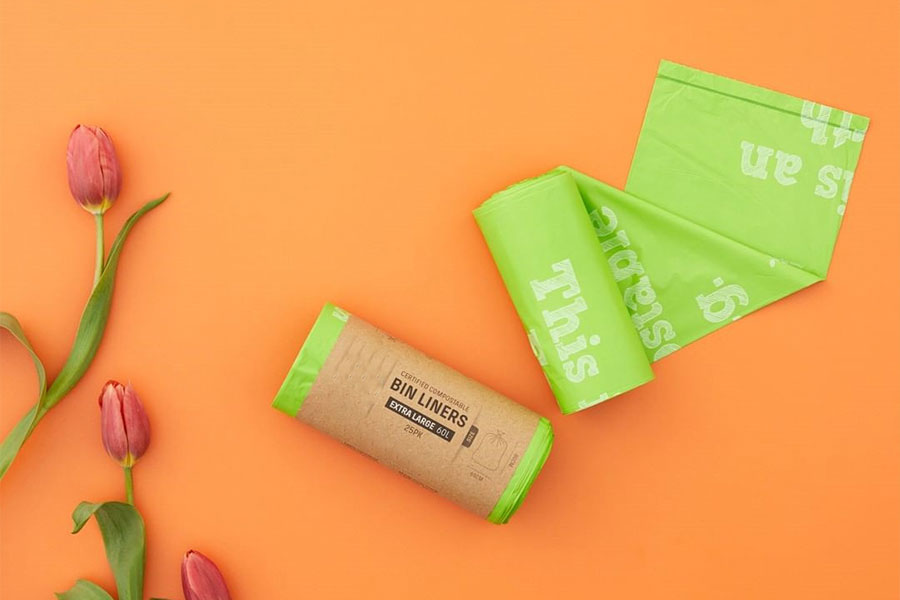
Choose a kitchen caddy liner by checking three things on the actual caddy. The bag needs to reach the base without hanging from the rim, the lid and handle need to move freely once the cuff is fitted, and the loaded bag has to come out intact at the household's normal change point. A caddy's litre rating helps identify it. Measure the rim and depth yourself before using that rating to order bags.
Confirm the collection service's liner rules early. A program may accept a compostable liner, specify a type or mark, prefer food waste loose, or allow other lining materials. A liner that fits well still has to suit the collection route. Get the operator's instructions for the authority or service you are supplying and keep them alongside the caddy model on the purchase brief.
Fit the liner with the lid and handle attached
Photograph the empty caddy with its lid open. Follow the path the film will take around the outside of the rim or under its retainer, using a flexible tape. Measure the inside depth to the base where the waste will sit. If the caddy tapers sharply, note where it narrows. A liner can match the mouth and still bunch at the bottom, taking up space or trapping material behind a fold.
Write down the bag dimensions as the supplier measures them. For a liner with two flat walls, the clear opening perimeter is roughly twice the flat clear width. A gusseted liner needs an opened measurement or a drawing that shows which folds are counted. Check where the supplier measures length. The overall dimension may include a bottom seal, handles or a closure channel, while the caddy needs usable film down to its floor. The bin liner sizing guide gives a way to compare rim readings and bag openings when more than one caddy is in service.
Fit the cuff the way a resident would. Close the lid, open it again and lift the carry handle from its resting position. Note where the folded film sits near hinges, latches or handle pivots. A cuff that looks neat with the lid up can pull tight when the handle moves. If it catches, mark the spot before adjusting the bag. A different cuff depth or fold may solve the problem on the same caddy.
Look at the fit after putting a light load into the liner and again at the usual change point. If the cuff pulls inside, see whether the bag was suspended above the floor or simply lost its grip on the rim. If the lid closes on the empty bag and starts catching later, check whether the contents are pushing material up into the hinge area. Distinguish excess material at the mouth from slack in the base. Reducing overall length to fix a fold at the hinge can leave the bag unsupported at the bottom.
The star-seal bin liner product shows one way a liner sits in a container. For a small kitchen caddy, use a loose sample in the actual model and check how the bottom spreads once the bag is loaded.

Reproduce the food waste routine
Find out when the bag is normally changed indoors. A household may take it outside after a substantial meal or wait until there is enough for a useful trip to the outdoor container. That interval is separate from the kerbside collection schedule. If a distributor is supplying several housing types, consider a short use period and a longer one that represents the real service pattern. Test the periods you intend to support.
Start with a clean stand-in that reflects the normal weight, shape and moisture. Include a damp load if it represents the food waste collected in the program. A few moist scraps near the floor of the caddy give a different handling case from a heavy, wet mass pressing into a fold. Avoid basing the trial on free liquids that the service tells people to leave out. Record the contents and where the moisture was concentrated so that the comparison can be repeated on the next sample.
During the trial, use the ordinary lid and handle positions. Check the liner after adding the load and again before taking it out. If liquid appears under the bag, look for the first visible sign of a puncture, seam separation or drips that passed down the outside while loading. Examine the caddy as well as the liner. A wet patch tells you where to look. Keep the location and timing with the result instead of classifying every wet caddy as a leaking seam.
Look at the bag below the cuff before tying it or lifting it. A projecting piece can make the neck difficult to gather, especially near a hinge. Try lifting with the grip the instructions call for and transferring the liner into the outdoor caddy or other approved container. If a change in grip is needed to keep the load secure, record that motion. People with only one hand available may have trouble holding a loose cuff and opening an outdoor lid at the same time.
If the service uses a locking handle, try the complete kitchen-to-outdoor transfer with the latch set as instructed. Pay attention to the hinge on the receiving container as the resident sets the liner down. A cuff that stays clear indoors may catch on the second lid when the bag is deposited. If the service instead asks residents to empty the scraps out of the liner, test that motion with the approved container and reflect it in the pack directions. The operator's collection instructions determine which test belongs in the approval.
A fit record for each caddy model
| Check during the trial | What to write down |
|---|---|
| Fit the mouth | Rim path in millimetres, cuff depth, position under any retainer |
| Settle to the base | Usable depth, folds at the bottom, how the bag sits under load |
| Open and shut the lid | Whether the film touches a hinge or prevents the latch from closing |
| Carry the caddy | Handle movement and whether the fitted cuff shifts |
| Hold the normal waste load | Load description, change interval used and visible moisture or damage |
| Remove and transfer | Grip, clearance over the rim, where the bag first catches or tears |
Take a photo from the side before removal. A liner that wraps a lip cleanly when empty may have a different fold after the contents settle. If one trial looks different from the next, check how much cuff each person turned over, then have both participants fit another liner from the same pack. Mark the finished fold positions so that the next trial can follow the better routine.
For a mixed caddy fleet, confirm the smallest rim and the deepest floor independently. A bag large enough for the deep container may leave too much material around a shallower one. Put a candidate common liner in both. Test the smallest caddy with the lid closed and check the deepest caddy after a full routine load. If each version needs an installation trick that households cannot easily follow, consider using a clearly identified liner for each group.
Tell households what their service accepts
Use the operator's name and the service area on the instructions when a pack is distributed through a specific program. Canterbury City Council accepts compostable caddy liners and identifies paper options while asking residents to keep ordinary carrier bags out. North Herts Council allows compostable liners and certain other plastic bags, with an exception for black bin bags. These are service-specific examples. Confirm the instructions for the collection route named on your own pack before it goes to print.
Give people a simple way to identify the caddy the liner fits. Include the model where available and the fitting dimensions if the pack serves several models. Show where the cuff sits and what to do when the liner is hard to close. Use a change instruction residents can apply, such as tying or transferring the bag before it becomes too full to lift, together with any service-specific requirements. If a program recommends a change interval, check that the sample was assessed under comparable conditions before repeating that wording.
Where the packaging uses a compostability mark, match it to the finished liner and the applicable scheme. The collection service still sets its acceptance rules. The product claim, fitting instructions and disposal route need distinct lines on the pack. For an assortment sold in several areas, point to the relevant service instruction and keep the main bag details easy to find on the retail page.
Before approving a bulk order, ask another person to fit a liner from the proposed pack using only the printed information. Observe where they look for the size and how they tell whether the cuff belongs inside a ring or over the lip. Have them explain where they would put the filled liner. If they choose a different container or miss a local restriction, move that instruction to the place they checked first. A supplier and a buyer may know which bag fits simply by looking at it, while a resident has only the pack and the caddy in front of them.
Check the packed count while doing the same run. For a roll, remove a few liners at the beginning and keep going until the final bags can be reached. If a household tears the first bag while opening the pack, check the start label or roll presentation. If a bulk delivery arrives with several liner formats, make sure the outer carton identifies which caddy each version is for. The right fit can become a service complaint when packs are easy to mix up.
Decide which part needs another sample
If the mouth stretches over the rim and pulls back into the caddy once loaded, assess a wider clear opening. If the film stays in place on the rim but hangs above the floor, ask for more usable depth. If two candidates reach the base but one interferes with the lid, compare the cuff and upper folds before changing the whole bag. A fault that starts during the lift deserves a check of the removal path, the change point and the condition of the loaded film.
Record the correction on the drawing and the caddy photo. Ask the supplier to identify the revised dimension or fold and repeat the same trial on the caddy that exposed the problem. If the new sample also goes into another service area's pack, check both the fit and the collection instructions for that separate use.
When the caddy itself has changed, keep the old model identifier on any remaining liner stock. A new lid or handle can require a new fit check even if the authority keeps the same capacity in the resident instructions.
For available formats, browse the compostable garbage bag and liner range. Send HENSEIN-BIO the caddy model, rim dimensions and service requirements when requesting samples. Include the usual change point, a photo of the lid and handle, and any liner restrictions the collection operator applies.