
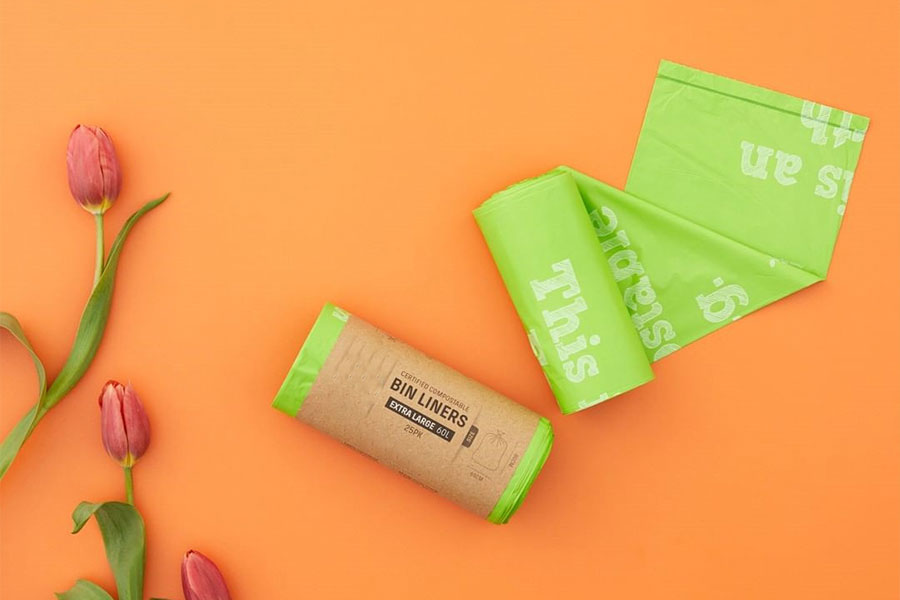
Measure the path the bag has to wrap around at the bin rim, the depth it has to reach and the extra film needed for fitting and closing. Use those dimensions to choose a sample, then try it in the actual bin. A capacity label in litres or gallons is useful for identifying a bin range. Measure the rim and usable depth to work out how wide the opening should be and how much film will be left for the closure.
You can work from one bin at a time. Put the model number, its room or site and a photo of the open rim at the top of the fit sheet. If the same bin body is used with different lids, mark the lid or retainer separately. A liner may fit over the exposed rim and be too bulky to sit under the frame that keeps it in place. Take the measurements with the hardware installed as it is used.
Measure around the outside of the fitted rim
Run a flexible tape along the line the bag will follow. For a loose cuff that folds over the lip, measure around the outside of the lip. For a liner that sits inside a retaining ring, measure along the fitting path specified for that ring and check where the bag feeds through it. Include any part of the hardware the film actually has to pass over. A ruler across the opening gives you the inside mouth width, which can be much smaller than the path used by the cuff.
On a simple round rim, circumference is approximately π times the diameter at the chosen line. On a square-cornered rectangle, it is twice the sum of the outside width and length at that line. A flexible tape is preferable if the corners are rounded or the rim has projections. Record the actual tape reading and use the formula as a cross-check. Measure a tapered bin at the lip, then check the body shape separately for how the liner sits.
For a simple bag with two flat panels and no gussets, the available opening perimeter is about twice the clear flat width. Divide the rim measurement by two to estimate a starting clear width, then allow installation slack and agree on the reference points for measurement. Seams and the rim hardware can reduce the room available. The estimate applies to the mouth of an ungusseted bag. On a gusseted bag, use the opened mouth or get the supplier's full developed-perimeter drawing, including the way they count the folds.
Take a rectangular bin with an outside rim measuring 420 by 310 mm. A sharp-cornered rectangle of that size measures 1,460 mm around, which suggests 730 mm of clear flat mouth width before ease. If the tape reads 1,430 mm around the rounded rim, use half of that reading, or 715 mm, before adding slack. Try a candidate wider than 715 mm on the real retainer. The allowance depends on how the film goes on and how tightly the bin holds it.
Measure the depth where the bag actually sits
Start inside the bin at the rim line used for fitting and measure down to the point where the loaded liner should rest. Check how the bottom is shaped. A rectangular floor, rounded floor or raised section can affect the way the bag spreads out when filled. For a tall narrow bin, use a clean trial fill to see whether the bottom is supported. A bag hung from the rim can look neat when empty and become tight at the base when a load goes in.
Add the amount of film needed to turn over the rim, or whatever portion is held by the actual fixing system. If the bin has a strong taper or the seal pulls part of the film into folds, use a sample to judge whether the available body length is sufficient. Ask the supplier to show where length starts and ends. The overall bag length can include a drawstring channel, handles or part of the bottom seal. Use the drawing to distinguish those figures from the clear body length available inside the bin.
For a construction reference, see the star-seal bin liner product. Use a sample of the intended bag to see where its bottom sits when opened. If the position of the bottom join changes how the bag fits, the star-seal and flat-seal comparison explains what to observe at the base and during removal. Keep seal performance checks in their own record so a change in fit is visible independently.

Check the last few inches of film at the top
Try the normal fill level before taking the cuff off. Plain film for a knot has to be reachable above the load. Handles need room for the intended tie, and a drawstring channel needs enough clearance for the operator to pull the ends without catching them on the bin. Record which closure is used at each site. If a team changes from a knot to a drawstring, a bag with the same printed length may give it a different usable depth.
Start with depth plus the film needed for fitting as a rough length screen. Then check whether the required closure can still be made at the agreed fill height. Some cuff allowance becomes free when the liner comes off the rim, so counting the full cuff and the full closure allowance as two independent additions can overstate the required length. The loaded trial tells you how much of the film is available in the actual sequence. If a bag is too long, inspect where excess film sits. It may bunch at the floor or get in the way of a retainer, depending on the bin.
Keep capacity labels in their place
Consider a tall bin behind a checkout and a wider bin in a prep area. They could carry similar volume ratings even though a tall bag that fits the first has too narrow an opening for the second. A wide bag that fits the second might have excess width around the tall bin's mouth but still fail to reach its floor. If you are replacing an existing liner, take measurements from both the bin and a loose bag. Ask what staff like and dislike about the current fit before copying the size on the carton.
Published container dimensions help identify models, but check the points shown on the maker's drawing. Rubbermaid Commercial's 23-gallon Slim Jim model page provides external product dimensions and describes rim cinches. To fit a bag on that model, measure the lip or cinch path and the depth the liner can actually use. A lid or an external handle can be included in a product dimension without belonging in the bag measurement.
If your locations mix litres and gallons, record what the printed capacity refers to and use a single unit for dimensions in the worksheet. Millimetres keep drawings and smaller allowances easy to compare. Check conversions with a second person when transcribing a drawing from inches, and leave original values attached to the sample. Converting from a volume rating to another volume unit will not resolve the geometry.
Build a fit table the next site can use
| Record | Field measurements | Trial observation |
|---|---|---|
| Bin and retainer | Model, lid or ring, photograph and site | Can the liner be installed with the normal hardware? |
| Rim | Tape path and perimeter in mm | Does the cuff sit securely without excessive stretch? |
| Depth and base | Usable depth, base shape and any internal obstruction | Does the liner reach the floor and remain supported when loaded? |
| Candidate liner | Drawing ID, clear mouth width or perimeter, usable length and closure | Does it fit the measured path and leave access to the closure? |
| Fill and close | Usual change height, representative contents and method of closing | Is enough free film accessible to close the bag? |
| Removal | Grip, route to cart and removal sequence | Does the cuff release and can the liner clear the bin? |
Try a second sample on a fresh installation when you see a problem. If the same opening catches on the same corner, note the location and how the cuff was installed. If the issue disappears with a corrected fitting method, record that too. The purpose of a fit table is to distinguish a dimensional problem from a change in practice. A category-wide decision based on a single person stretching one sample over the rim is hard to reproduce at the other sites.
Use a clean, representative load in a controlled trial. Fill to the normal change point and close the liner as operators do. When it comes out, observe where it binds. A bag can be the right width at the rim and still stick against the sidewalls when filled. Before asking for a narrower bag, check whether the bottom or sides flare into space that the loaded liner cannot clear through the opening. Include a photograph of the filled sample when the cause is not obvious.
Take the tape reading again if the sites disagree about the result. A facilities buyer may be measuring around the exposed outer lip while a cleaning supervisor is following an internal ring. Record the two paths on the same photograph. For a proposed substitution, compare the original and replacement liner on the tightest fitting path and the deepest bin used in the group. Keep those two test cases distinct when they involve different models. The full fit record is more useful to a new site than a carton label that only names the capacity range.
Ask for a change that matches the symptom
If the cuff repeatedly falls inside, check the installation path and the actual open width. A wider bag may help when the mouth was stretched to fit. If a loose bag slips because the retainer cannot grip it, extra width can increase the slack. Where the bottom does not reach the floor at installation or stays suspended under load, investigate the body length and the way the bottom seal opens. If the liner reaches the floor and still leaves a short closing neck, record the fill height and the amount of free film needed by the chosen closure.
When several bin models have similar dimensions, decide whether one liner can cover the group by testing the extremes. The largest rim controls one part of the trial, while the deepest bin controls another. Include the tightest retainer or lid if it is on a third model. A shared SKU may simplify ordering, provided the excess film on the smaller bins stays manageable and the bag works on the larger ones. Keep the fit table with the approved drawing so substitutions can be assessed later.
Select formats for sampling from the compostable garbage bag and liner range. Send the rim measurements and fit sheet to HENSEIN-BIO, along with a photograph of the installed bag. For several bins, identify the model with the largest rim and the model with the deepest body.