

Start a reseal comparison by defining what counts as one complete opening and closing cycle. Use the same contents, handling sequence and observations for every sample. Check the zipper along its full length, then identify whether a problem comes from incomplete engagement, damage to the closure or a failure elsewhere in the bag.
A bag that closes once on a supplier's desk has demonstrated a limited action. A buyer selecting resealable packaging needs to know whether the finished sample can be filled, opened and closed in the intended application. That practical evaluation should remain separate from food-contact, barrier, compostability or laboratory seal-strength claims.
Write the task before choosing the number of cycles
Describe what the user will put in the bag and why they will reopen it. A pack holding small retail components creates a different sequence from one opened repeatedly to remove portions of a dry product. Define the fill level, typical handling and the conditions in which the bag is expected to be used.
Choose a comparison cycle count around that task and agree it before the samples are tested. There is no universal number that makes every zipper bag acceptable. If the commercial brief expects a particular number of openings, identify the basis for that expectation and the evidence required to support any corresponding claim.
Keep an unused reference sample. Label the trial bags with the product reference, supplied batch information and measured dimensions. If samples have different zipper positions or usable body lengths, record that before trying to compare the ease of closing them.
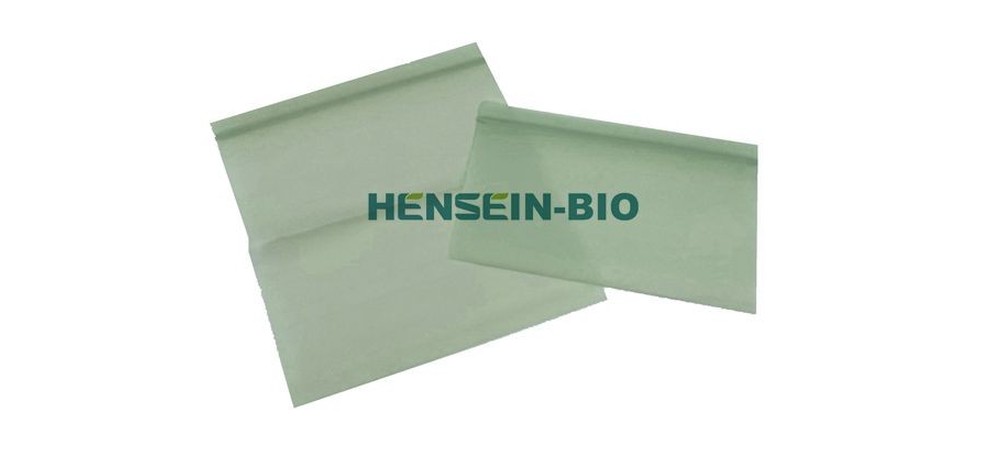
HENSEIN-BIO's resealable bag product is a relevant format for a sample discussion. Confirm the actual closure construction and intended application for the proposed order. The product photograph does not establish a repeat-opening rating.
Define a complete closing cycle
Write the sequence clearly enough that another operator can repeat it without watching the first tester. A practical sequence might be:
- Open the zipper using the intended grip and opening direction.
- Perform the agreed access action, such as removing and replacing a defined item.
- Return the contents to the specified position and fill level.
- Align the closure profiles without stretching the bag to compensate for a mismatch.
- Close using the agreed pressing motion along the zipper.
- Inspect the full closure and record any correction needed to complete it.
- Perform any separately defined handling check before the next opening.
Adapt that sequence to the real product. If ordinary users close the bag with their fingers, do not evaluate every sample only with a special tool that customers will never have. If a dispensing or packing process supplies a particular closing device, identify it and keep it consistent.
Record a second attempt to close rather than quietly replacing the first attempt with a successful one. The distinction is useful: a zipper that eventually closes may still create an inconvenient user task. Count corrections separately from damage or complete loss of function.
Check the ends, centre and any distorted area
Keep material in the closure as a separate condition
Begin with a clean closure to establish how the unused sample engages. If normal use can bring powder, crumbs or small components close to the zipper, describe that exposure as a separate trial condition using an appropriate surrogate. Keep the amount and placement consistent. Do not add an arbitrary contaminant to one sample and compare it with a clean alternative.
If the user normally clears the closure before pressing it shut, include that action explicitly. Record whether the closing difficulty remains after the agreed action. This helps distinguish a profile or attachment issue from an obstruction introduced during use, and gives the next sample discussion a condition that can be repeated.
Begin with an empty sample to understand the closure, then evaluate the agreed filled condition. Inspect both ends of the zipper, its centre and any section affected by a fold or distortion. A short section that appears engaged does not establish that the entire opening is closed.
Watch the relationship between the user's grip and the contents. If an overfilled bag pushes against the zipper, aligning the profiles can become a different task from closing a lightly filled sample. Keep the fill level defined so one candidate does not benefit from being tested with less material inside.
Note whether the closure can be aligned and pressed consistently along its length. Check how the user recognises that it is closed. Where visual or tactile feedback is part of the assessment, describe the observation rather than assuming an audible click or another feature that the actual construction does not provide.
After each agreed observation point, inspect the surrounding film and the areas where the zipper joins the body. A repeated opening trial can reveal more than a problem with the interlocking profiles. Keep the bag intact for investigation when a new tear, distortion or separation appears.
Classify what failed before asking for a stronger zipper
Several different outcomes are often described as a bag that “will not seal.” Distinguish them in the trial notes.
| Observation | Question it raises | Evidence worth retaining |
|---|---|---|
| A section was never engaged | Was alignment or pressing incomplete, or was there an obstruction? | Closure location, operator action and whether a correction worked |
| Profiles disengage during the defined handling | Does the finished closure retain engagement under that condition? | Fill level, handling sequence and point of disengagement |
| Zipper separates from the body | Did the attachment area fail? | Intact failed sample and location of separation |
| Film tears beside the zipper | Is the grip, geometry or body construction contributing? | Tear origin, opening direction and sample dimensions |
| Contents escape through a body defect | Is the failure in film or a body seal? | Leak location and the bag's condition before the check |
| Closure becomes harder to align after use | What changed during the cycle sequence? | Cycle number, distortion and relevant observations |
These categories organise an investigation; they do not diagnose every cause from appearance alone. If a failure cannot be located confidently, record that uncertainty and retain the sample. Repeatedly opening and stretching it while discussing the result can destroy useful evidence.
Use the same naming convention across suppliers. If one report counts every second closing attempt as a failure and another records only a torn zipper, their totals cannot be compared directly. Keep the written observations behind any summary rating.
Separate closure retention from leak and barrier claims
A closed zipper is not proof that a bag can contain liquids in every orientation. If liquid containment is required, specify the intended contents, orientation, duration and other relevant conditions, then arrange an appropriate evaluation of the complete bag. Keep any practical liquid screen identified as such.
Likewise, an opening-and-closing comparison cannot establish moisture barrier, aroma retention, freezer suitability or microwave use. Those questions require their own application information and supporting evidence. Do not add those properties to a sales description because a sample survives a chosen cycle sequence.
Food-contact information should match the finished bag and intended use. The zipper, body and printing need to be considered within the relevant document scope. A closure comparison can be part of a procurement file without becoming an approval for every food type, contact time or temperature.
Keep compostability documentation separate as well. Confirm the construction covered by any finished-product claim, including the closure where applicable. The fact that a material or another bag format has supporting documentation does not automatically establish the claim for this resealable construction.
Know what a laboratory number describes
If a supplier provides a seal-strength report, read the method and specimen description before comparing the numerical result with a reseal trial. ASTM F88/F88M measures force on specimens containing seals. Its public description also distinguishes the specimen measurement from a user opening an entire package.
Ask which feature of the supplied bag the report addresses. A result from a joined attachment area may be relevant to one failure mode while saying little about the ease of aligning the zipper profiles. A practical cycle count and a laboratory force result should therefore keep their own units and meanings.
Where laboratory work is needed, agree the applicable method, specimen preparation, conditioning and reporting with the testing provider. Do not label an informal finger-opening exercise as an ASTM method, and do not reconstruct a standard procedure from a short public scope description.
Use a working record that preserves the sequence
One row per sample or observation point is more useful than a single verdict for a whole pack. Include enough information to identify a pattern without inventing precision the trial did not have.
The working record should contain the sample reference, usable bag dimensions, zipper construction information supplied, contents and fill level, environment, opening and closing method, observation points, completed cycles and any correction or failure. Add the location and the condition of the retained sample when something changes.
For an illustrative comparison, imagine that both designs are assigned ten cycles under the same agreed conditions. One sample needs a second closing attempt at cycle four and completes the sequence. Another develops a film tear during cycle seven. Those hypothetical observations describe different issues. They should not be combined into a single claim that one design lasts ten uses and the other lasts six in all applications.
If several operators take part, retain their observations separately before summarising. A closure that works reliably for one person but is difficult for others may need a closer usability review. Do not turn that difference into a claim about all customers; use it to decide what further evidence or design change is needed.
Turn the observations into the next sample request
Agree acceptance criteria before the comparison expands. Identify which outcomes stop the trial, which require investigation and which are acceptable for the defined task. Distinguish an incomplete first closure from a torn body or detached zipper, even if the commercial decision treats more than one as unacceptable.
When requesting a change, name the observation it is intended to address. If the issue is a tear beside the opening, ask the supplier to review the relevant grip area and construction. If the issue is incomplete engagement, provide the closure location, fill condition and closing sequence. A request for “better quality” loses those distinctions.
Keep the old and new sample references together. Where more than one feature changes, describe the follow-up as a comparison of complete designs. If only one feature is intended to change, confirm that the rest of the specification remains comparable before attributing a different result to that feature.
Retain the approved sample, trial record and supporting documents as one purchasing reference. Future changes to bag size, zipper position, film construction, printing or intended contents should prompt the team to ask whether the earlier evaluation still applies. An unchanged product nickname does not settle that question.
Use the ziplock and resealable bag range to identify formats for discussion. Contact HENSEIN-BIO with your resealable packaging brief, including the contents, usable dimensions, intended opening sequence and the observations you want another sample to resolve. Keep any requested performance claim tied to the conditions and evidence that can support it.