

A produce roll can fit over a dispenser spindle and still be unsuitable for the fixture. The outer diameter may catch the frame, the roll may rub against a side support, or the bag may leave the holder in the wrong orientation for separation. Check the complete installed roll through its working life before approving a replacement for a grocery program.
The useful specification joins two sets of information: the bag and roll supplied by the manufacturer, and the fixture used in the store. Keep them on the same record. A bag-size description alone leaves the supplier to infer the core, winding and dispenser arrangement that the buyer actually needs.
Start with the fixture that stores will use
Identify the dispenser model and photograph it from the front and side. Include any spindle, retaining cap, guide, separation feature or cover. If the chain has more than one model, treat each as a separate fit case until a trial supports grouping them together.
Record the available space between the roll supports, the spindle diameter and the clearance around a newly installed roll. Measure the working area as installed. A fixture close to a wall, shelf edge or adjacent roll can behave differently from the same model on an open test bench.
Check how staff replenish it. Does the spindle lift out, slide sideways or remain fixed? Must a retaining piece pass through the core? Can a full roll be installed without bending the support or forcing the core? A sample that can be made to operate after an awkward installation may still be a poor replacement for a store network.
If fixtures have wear or damage, record that separately. Do not redesign a roll around one broken holder and then assume the result represents the chain's normal equipment. Use a sound reference fixture for the controlled comparison and retain observations from the in-store trial as a separate part of the decision.
Measure the roll as a finished assembly
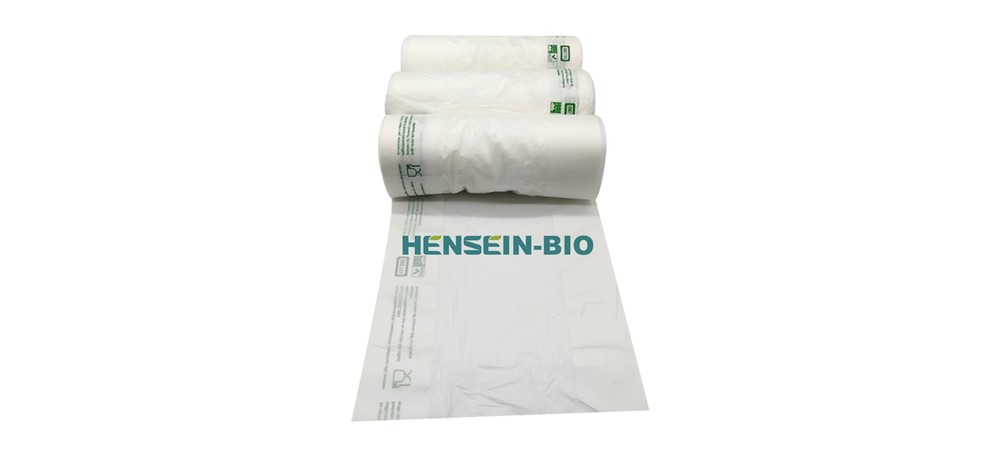
The HENSEIN-BIO produce bag range contains formats that need to be described at both bag and roll level. The C-fold produce bag product is a relevant example: the roll's width and the unfolded bag's width answer different questions.
Measure roll width between the outside edges of the wound film. Then identify whether the core projects beyond those edges. A fixture can have sufficient room for the film while a protruding core prevents installation, or sufficient spindle length while the wound film rubs against the frame.
Measure the full roll's outside diameter without squeezing it. Note the condition of its shape: a roll that is compressed or uneven may not rotate like the round reference sample. Record the core's internal diameter and usable length. The outside core diameter can also be useful when investigating the final stage of dispensing.
Published on-roll bag specifications from Avatar New Materials list the core separately from bag size and identify dispenser information as an input. Those specifications concern another supplier's PE products, not HENSEIN-BIO stock. They illustrate why a core and fixture description belong in an inquiry rather than being assumed from a bag dimension.
| Record | Measurement or observation | Equipment feature to compare |
|---|---|---|
| Wound roll width | Film edge to film edge | Space between guides or supports |
| Total assembly width | Include any projecting core | Installation space and retaining arrangement |
| Full roll diameter | Relaxed outer diameter and shape | Frame, cover and surrounding clearance |
| Core internal diameter | Bore size and condition | Spindle and retaining parts |
| Core length | Including any projection | Support position and side rubbing |
| Bag dimensions | Folded roll width and unfolded bag size | Required customer bag and fixture footprint |
| Roll count | Bags per roll as supplied | Replenishment plan and comparison basis |
Avoid adding an untested universal clearance to the table. Agree the relevant tolerances and check the physical sample in the equipment. The amount of free movement needed depends on the fixture, the roll and how it is installed.
Follow the bag from the roll to the customer
Thread the leading bag in the intended direction and photograph the result. A roll may be installed to unwind from above or below, depending on the fixture. Keep the installation direction in the comparison record so one operator does not unknowingly reverse it between samples.
Pull a bag using the action available to a customer standing at the fixture. Observe how the film travels past any guide and where the perforation reaches the separation feature. Check whether the open end is easy to identify after separation. A bag that dispenses cleanly but leaves customers searching for the opening has only completed part of the task.
Compare folded and unfolded dimensions without turning this into a separate bag-format decision. A C-fold roll can occupy a narrow space while opening into a wider bag. The unfolded width should be checked for produce use; the folded width should be checked for dispensing. Both belong in the specification, with a drawing showing what each number means.
Watch for sideways movement. If the roll drifts until it rubs against a support, record when that happens and how the operator corrects it. An improvised spacer may help diagnose the problem, but it should not disappear from the final specification as an assumed store workaround.
Distinguish a separation problem from a holder problem
When two bags come away together, note whether the roll continued rotating, the perforation failed to separate or the film bypassed the fixture's separation point. Those observations point to different questions. A general comment that the roll is “too strong” does not identify which part needs attention.
If a bag tears away from the intended line, mark the tear and keep the separated piece. Check how the user pulled, whether the perforation was positioned correctly and whether a sharp or damaged fixture edge contacted the film. A damaged holder should not be mistaken for a property of the bag material.
Try the sample using the normal customer motion before adding a carefully controlled bench comparison. The store trial establishes how the roll behaves in its intended setting. A controlled comparison can then help isolate the effect of orientation, holder contact or separation technique.
Keep opening and separation as separate observations. A perforation can separate well while the bag mouth is difficult to open. Conversely, an easy-opening bag can produce a poor dispensing experience if customers have to restrain a free-spinning roll with the other hand. Ask users to describe the step that caused difficulty.
A full-roll trial needs several observation points
Begin with a full roll, not a short length transferred onto an almost-empty core. The largest roll diameter, its installed position and its replenishment sequence are part of the approval. Retain the original sample identification so later observations can be matched to the same assembly.
After the initial installation, check dispensing again around the middle and near the core. The fixture should continue to provide usable access as the roll changes size. Near the end, look at the final bags, any attachment to the core and the action required to start a replacement roll.
If consuming the entire roll immediately is impractical, plan how the trial will be completed during normal operation. Record the positions actually observed. Do not report “full-roll tested” when only the first few bags were tried, and do not combine observations from several unidentified rolls into one apparently continuous test.
Include replenishment in the result. Note whether the empty core is easy to remove, whether staff can identify the replacement correctly and whether the first bag can be found without damaging the roll. A comparison that times only customer pulling can miss a recurring difficulty during installation.
Diagnose the failure before changing the order
The following record keeps a practical observation connected to an investigation. It is a troubleshooting aid, not evidence that every symptom has a single cause.
| Observation | What to inspect next | What to keep in the record |
|---|---|---|
| Full roll catches the frame | Diameter, roll shape and surrounding clearance | Contact location and installed photograph |
| Roll rubs one side | Assembly width, core projection and lateral movement | Position at installation and after dispensing |
| Core will not pass onto spindle | Bore, retaining parts and core condition | Measurements and the stage where installation stops |
| Two bags dispense together | Rotation, perforation position and separation feature | A short sequence showing the actual pull |
| Film tears away from perforation | Contact edges, pull direction and tear origin | Labelled bag sample and holder condition |
| Last bags are awkward | Core attachment, access and installation direction | The remaining roll and final bag sequence |
Where a dimensional mismatch is confirmed, request a sample that changes the relevant field while keeping the rest of the construction identifiable. If several features change together, restart the comparison as a new finished-roll design. A roll with a new core and a different bag count should not inherit approval solely from the earlier bag-size drawing.
Convert the store trial into a purchasing specification
Keep delivery condition separate from nominal dimensions
Inspect the sample after it has travelled in the intended packing format. A loose demonstration roll and a roll removed from a packed carton may arrive in different conditions. Note flattened edges, distorted cores or film that has shifted sideways, and keep the carton reference with the observation. These findings should prompt a packing discussion before a nominal roll dimension is changed.
Where the store receives part cartons or transfers rolls between locations, include that handling in a limited pilot. Keep the approved roll protected as the reference and compare it with the roll actually installed. If damage appears during distribution, a different spindle measurement will not explain the whole problem. Record when the change first becomes visible so packaging, handling and roll construction can be investigated separately.
Keep one reference pack for each approved fixture and roll combination. It should include the bag drawing, roll dimensions, core details, count, installation direction and the fixture identification. Add photographs that show threading and replenishment, rather than relying on a picture of the unopened carton.
Specify how the total quantity is counted in the quotation: bags per roll, rolls per inner pack and inner packs per carton. Two carton prices can represent different numbers of bags. A change in roll count can also change the assembly that was tested, so review the physical fit when that field changes.
Review food-contact information separately for the intended produce and use conditions. Dispenser compatibility does not establish food-contact suitability or a compostability claim. The purchasing file should connect those requirements to the finished product without treating a successful installation as approval of every other attribute.
When a chain uses multiple fixtures, retain a simple compatibility list showing which combinations were actually tried. Leave an untested combination unapproved until it has supporting observations. This prevents a sample accepted in one store from becoming an undocumented promise for every dispenser in the estate.
Contact HENSEIN-BIO with your dispenser measurements and roll brief. Include the fixture model, photographs, full-roll width and diameter, core information and the specific difficulty with the current roll. Those details give the next sample discussion a defined equipment interface and a trial that can be repeated in store.