Is it eco-friendly if you reuse grocery bags as trash bags?
Many people wonder if reusing grocery bags as trash bags is an eco-friendly choice. The concern comes from the fact that plastic grocery bags were never designed for long-term waste management. While reusing them may feel like reducing waste, the consequences often include faster tearing, leakage, and reliance on single-use plastics that end up in landfills. Over time, this practice contributes to pollution, hinders recycling, and increases microplastic generation. A better solution lies in switching to biodegradable garbage bags manufactured by reliable suppliers. Companies like Hensein, a wholesaler and manufacturer of customizable biodegradable trash bags, ensure both quality and certifications across different markets, offering durable alternatives that truly support sustainability and environmental responsibility.
Reusing grocery bags as trash bags is not eco-friendly. The better option is certified, high-quality biodegradable trash bags that decompose safely and reduce landfill waste.
This is where eco-conscious solutions step in—exploring biodegradable garbage bags and understanding why they matter makes all the difference. Let’s break it down further.
What are the best 16-gallon trash bags?
The best 16-gallon trash bags should balance strength, eco-friendliness, and reliability. Unlike flimsy grocery bags, which tear easily, biodegradable trash bags are designed for heavier loads and safe disposal. A 16-gallon capacity is ideal for medium to large households, supermarkets, and office use. When choosing, buyers should look for certifications such as EN13432 or ASTM D6400 to ensure true compostability. Landfill biodegradable trash bags are another option, breaking down faster than traditional plastics in landfill conditions. As a professional supplier and manufacturer, Hensein offers customizable designs with strong sealing, leak-proof performance, and flexible thickness, making them suitable for bulk wholesale buyers and international distribution.
Key features to consider
- Durability and puncture resistance
- Compostable certification for compliance with environmental standards
- Custom printing options for branding and retail appeal
- Competitive wholesale pricing from trusted manufacturers
In short, the best 16-gallon trash bags combine sustainability with dependable quality, which is why biodegradable garbage bags are becoming the preferred choice for supermarkets and eco-conscious businesses worldwide.
Are poly mailer bags eco-friendly?
Poly mailer bags are widely used for e-commerce and retail, but their eco-friendliness is questionable. Standard poly mailers are made from polyethylene, a petroleum-based plastic that takes centuries to degrade. Even if reused, they often end up in landfills. However, biodegradable alternatives now exist, offering mailers made from compostable materials that break down in industrial or home compost systems. As a wholesaler and supplier, Hensein provides businesses with customizable biodegradable mailers, ensuring packaging aligns with green standards while maintaining durability and cost-effectiveness. For large buyers, this not only supports sustainability but also builds consumer trust, as end customers increasingly demand environmentally responsible packaging solutions.
Environmental impact comparison
Traditional poly mailers contribute heavily to plastic waste, while biodegradable poly mailers significantly reduce landfill pressure. Choosing suppliers with strong certifications and transparent quality testing is crucial to avoid greenwashing.
Why are compostable bags so expensive?
A common concern among buyers is why compostable bags cost more than regular plastic bags. The higher price comes from several factors: advanced raw materials, certification costs, and limited production capacity compared to conventional plastics. Compostable bags use plant-based materials such as corn starch or PLA, which are renewable but more expensive to process. Manufacturers also invest in strict testing to meet international compostability standards, ensuring compliance across multiple countries. While this raises the unit price, the environmental benefits are far greater—preventing long-term plastic pollution and offering consumers guilt-free disposal.
How wholesalers benefit
For large-scale buyers such as supermarkets, Amazon sellers, and distributors, investing in biodegradable trash bags delivers competitive advantages. Hensein, as a direct manufacturer and supplier, reduces costs through bulk orders, efficient production lines, and customizable printing options. By sourcing from trusted factories, wholesalers avoid the risk of poor quality and fake certifications, ensuring long-term savings and stronger customer loyalty. In addition, governments and markets worldwide are increasingly regulating single-use plastics, meaning that transitioning now helps businesses stay ahead of compliance requirements.
Balancing cost and sustainability
Although compostable bags are priced higher, their long-term environmental value, branding opportunities, and compliance benefits outweigh the upfront cost. Businesses that adopt biodegradable garbage bags today are not only protecting the environment but also strengthening their position in a competitive, eco-driven market.
Reusing grocery bags as trash bags may seem convenient, but true sustainability lies in choosing biodegradable trash bags from certified suppliers. Eco-friendly choices today mean a cleaner future tomorrow.
About HENSEIN-BIO
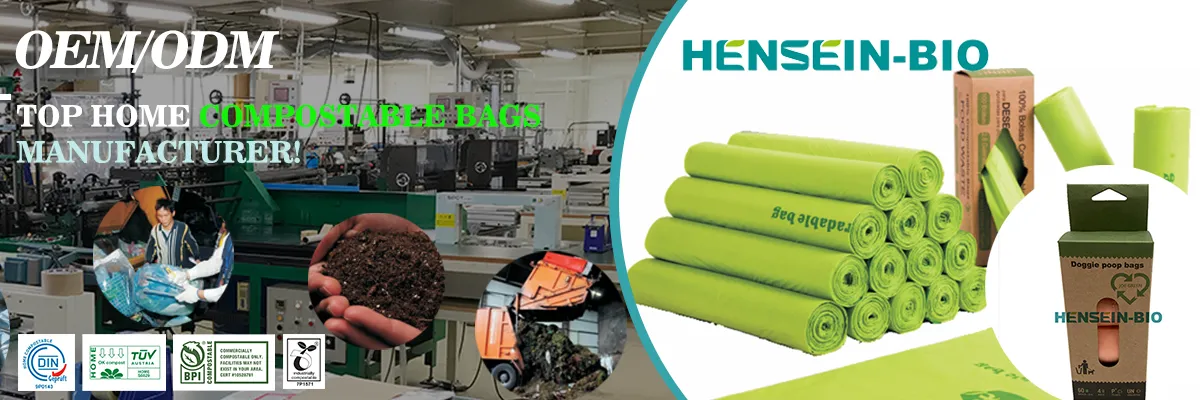
HENSEIN-BIO is a professional 17+ years manufacturer in producing Home compostable & biogegradable bags including garbage bags , trash bags ,poop bags, dog bags, T-shirt bags, shopping bags, produce bags, handle bags and so on. We own the certificates of SGS, EN13432,ASTM D-6400, FDA food grade certificate, support color /size customization.
Welcome to consult for Catalog and Product. you can contact us at email sales@henseinbiobags.com